How to Build a Sustainable ESG Roadmap with Riverstone ESG Consulting
Introduction
Businesses no longer have the option of not considering the issue of Environmental, Social, and Governance (ESG). Regulators, investors and stakeholders in Singapore and the rest of Asia would like to see companies in the region making sustainability commitment that are measurable. However, this does not come easy as compliance requires but a definite, practical, and visionary course of action. This is where sustainable ESG roadmap consulting services in Singapore are applied. An effective roadmap will assist the companies in integrating ESG into their business processes, achieve new set goals, and meet the global standards. By bringing the expertise of Riverstone ESG Consulting, companies no longer need to just report but develop long-term plans that can make them resilient, increase the trust of their stakeholders, and grow.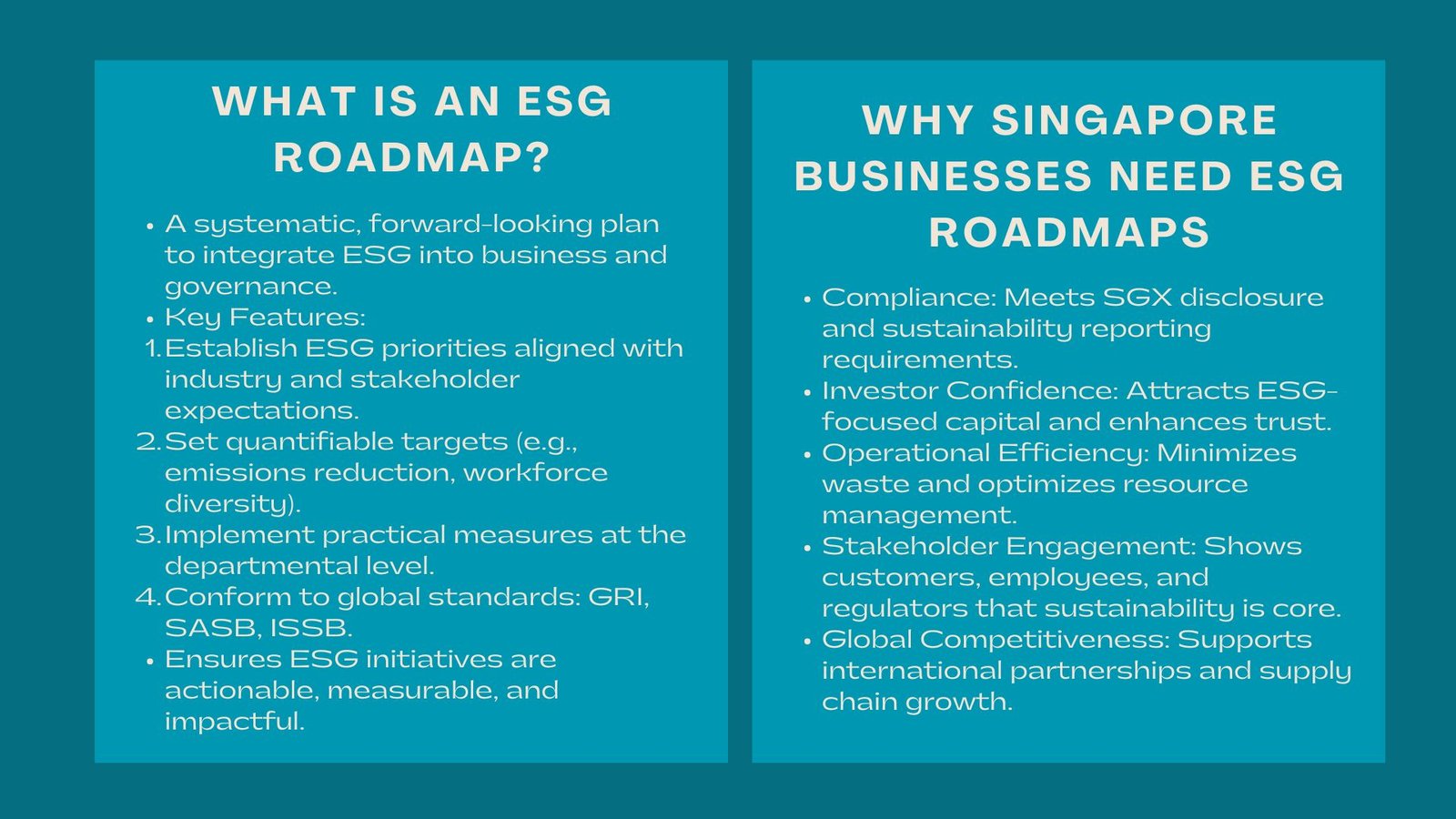
What Is an ESG Roadmap?
ESG roadmap is a systematic plan that is used to define how an organization will incorporate the principles of sustainability in its business and governance. A roadmap is forward looking unlike standalone compliance exercises. It:- Establishes ESG priorities along with industry, stakeholders and regulatory expectations.
- Establishes quantifiable targets like reduction of emissions or employee diversity.
- Gives practical measures to be implemented at the departmental level.
- Conforms to global standards such as GRI, SASB and ISSB
- The monitors are advanced by reporting and assurance mechanisms.
Why Businesses in Singapore Need an ESG Roadmap
Singapore has become a sustainability leader, and its policy has included the Singapore Green Plan 2030 and compulsory SGX sustainability disclosure. These needs are only the tip of the iceberg. A robust ESG plan has an advantage since it helps businesses:- Improving compliance: Adherence to changing reporting and disclosure standards.
- Enhancing investor confidence: Enticing capital market by ESG-oriented investors.
- Motivating operational efficiency: Minimizing waste and enhancing resource management.
- Bringing stakeholders in on board: Demonstrating to customers, employees and regulators that sustainability is core to corporate values.
- Positioning in terms of global competitiveness: Going global with international supply chains and partners.
How Riverstone ESG Consulting Supports ESG Roadmap Development
Riverstone ESG Consulting has built its reputation as a trusted partner for companies seeking actionable sustainability strategies. Their approach to sustainable ESG roadmap consulting services in Singapore is comprehensive, covering every stage of the journey:- Materiality Assessment
- Structural and regulatory Consistency.
- Goal Establishment and Strategy Design.
- Operations Integration.
- Training and Capacity Building.
- Monitoring, Reporting and Assurance.
Key Elements of a Sustainable ESG Roadmap
A successful roadmap that has been created with Riverstone will usually consist of:- Clear Vision and Objectives – This is a definition of what sustainability success would mean to the organization.
- Actionable Milestones – subdisaggregating long-term goals into short and medium term activities.
- Cross-Departmental Roles – Distribute the responsibilities of the leadership, operations, HR and supply chain teams.
- Data Management Systems – Putting in place sound mechanisms of gathering, verifying, and reporting ESG metrics.
- Stakeholder Engagement – Developing transparent and trusting relationships by listening to the investors, employees, and communities.
- Frequent Reviews and Modifications – Changing the roadmap when the regulations and stakeholder expectations change
Case Study: Building a Roadmap for Growth
A technology company based in Singapore with international partners was under pressure to show them sustainability performance. To develop an ESG roadmap, they contracted Riverstone to develop one. The process included:- An assessment of the materiality in order to determine material ESG risks and opportunities.
- Correlation with the Singapore Green Plan 2030.
- Educating the senior executives about how to incorporate ESG in making governance decisions.
- Creating a roadmap that identified specific milestones of decrease in carbon and workforce diversity.
ESG Trends Influencing Roadmap Development in 2025
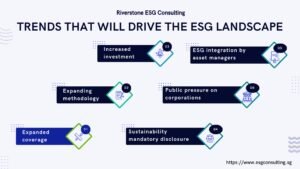
Riverstone maintains clients on the leading edge of the new trends that form the basis of ESG strategies:- Asia: the disclosure of climate risks is becoming mandatory.
- Biodiversity and resource consumption becoming popular along with carbon measurements.
- Green and ESG-compliant companies are increasingly getting opportunities as a result of sustainability-linked financing.
- Digital ESG solutions such as AI and blockchain which enhance the accuracy and transparency of data.
- Equity and governance diversity in the workforce turning into vital signs of corporation health.