What Is ESG Risk Management? Complete Guide
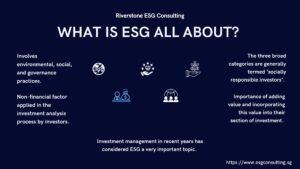
ESG risk management can be defined as the steps taken by businesses to recognize, measure, and lessen environmental, social, and governance risks that may impact their financial results, reputation, or business operations. This encompasses risk management related to climate change, regulatory changes, supply chain challenges, labor issues, and governance issues. The ESG risk reporting requirements are growing in various countries and are being incorporated into mainstream enterprise risk management processes rather than being siloed in a separate sustainability project.
Understanding What Is ESG Risk Management? Complete Guide
Climate change, regulation and increased stakeholder expectations have created one of the fastest-growing parts of corporate risk function which is ESG risk management. ESG risk management looks at a wider range of factors that have the potential to impact a company’s value and reputation, such as carbon exposure, supply chain labour conditions, data governance and board accountability—affecting a company’s value and reputation that is not traditionally part of risk management. With the increasing number of professionals moving into risk, compliance, finance, or sustainability positions, the ability to comprehend the process of risk identification and risk management is becoming more critical. This document provides a practical introduction to ESG risk management, covering what it is, how companies organize their programs, their challenges and troubles, and key takeaways from current practice.
What Does ESG Risk Management Actually Involve?
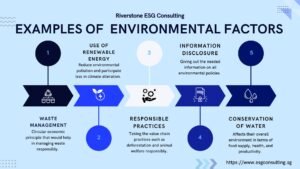
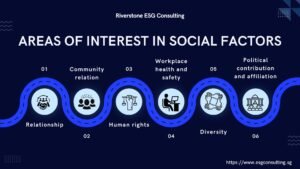
Fundamentally, ESG risk management is about converting the non-financial problems into the language of risk committees, boards and investors: probability, impact and mitigation cost. Environmental risks could be related to extreme weather events, water shortages, or carbon costs. Social risks could include employee relations, product safety or community relations. The risks to governance may be related to composition of the board, executive compensation plans or anti-corruption measures. These risks are usually expressed on the enterprise risk management (ERM) framework that the company already has in place, instead of as a separate, isolated ESG risk process.
In practice, this involves creating a joint risk register with sustainability and legal and finance teams to capture ESG risks in addition to traditional risks such as currency changes and cybersecurity risks. For instance, a company could identify “supplier dependence on a single coal-fired plant” as both environmental and operational continuity risk. This multi-disciplinary approach is the secret sauce behind why ESG risk management is much more than a sustainability checklist – it is a business risk with a quantifiable impact.
How Does ESG Climate Risk Management Fit Into the Bigger Picture?
Climate risk management is one of the most mature sections of ESG risk programs, as climate risks can sometimes be measurable and are increasingly becoming regulators’ expectations. Climate risk is generally divided into two subsectors: physical risks (e.g., flooding, wildfires, and heatwaves impacting facilities and supply chains) and transition risks (e.g., carbon pricing, consumer demand for lower carbon products, and stranded assets due to economy-wide transition to lower carbon energy sources). The Task Force on Climate-related Financial Disclosures (TCFD) has influenced the way companies approach climate risk analysis, by emphasizing scenario analysis over a fixed list of risks.
One way to look at climate risk management in practice is by performing scenario analysis, in which a business runs its operations and supply chain through various warming scenarios (e.g., 1.5°C scenario versus a 3°C scenario) to determine what it will look like if it experiences certain rather than others. For a food and beverage firm, for example, it could simulate the impact of climate change on production from important suppliers and base these findings in their decisions for sourcing from alternative areas or investing in programs that build supplier resilience. This kind of forward-looking analysis is what distinguishes “climate risk management” from mere emissions tracking, and it’s rapidly becoming a key criterion in investment and lending decisions about long-term business viability.
What Are the Core Steps in an ESG Risk Management Process?
The majority of ESG risk management programs have the same five-step process as conventional risk management programs but with ESG-specific inputs. The first step is companies conducting a scan of regulatory changes, stakeholder feedback, industry comparisons, and their own incident history to compile a list of potential ESG exposures. Second, they evaluate these risks by estimating the likelihood of the risk and the magnitude of potential financial or reputational losses, which may be done with a risk scoring matrix for some risks, and in some cases, scenario modeling for more complex risks, such as climate change. Third, they formulate mitigation measures that could be: diversification of suppliers, investment in cleaner technologies, improvement of governance policies or application of insurance against exposures. Fourth, they continually review risks, keeping track of risk indicators and making adjustments to the risk assessments as conditions evolve, including newly enacted laws, changes in commodity prices, etc. Fifth, they compile information on ESG risks for the board, regulatory bodies, and investors and incorporate them into annual reports, risk disclosures and sustainability reports.
What Are the Current ESG Risk Reporting Requirements Companies Face?
The reporting and disclosure requirements on ESG risk differ across regions, industries and company size, but increasingly disclose ESG risk is compulsory and standardised. The Corporate Sustainability Reporting Directive (CSRD) in the European Union requires large companies to report on climate and other ESG risks based on the double materiality approach, meaning that they must consider both the impact of climate and other ESG issues on the company and the impact of the company on the environment and society. While the SEC has taken steps to mandate climate disclosure in financial statements in the U.S., several Asian and Latin American stock exchanges have enacted their own ESG disclosure regulations for listed companies.
Multi-jurisdictional companies find it hard to manage overlapping and sometimes divergent regulatory reporting requirements. A multinational manufacturer could be subject to CSRD if they are operating in Europe, the SEC rules if they have listed shares on the US stock exchange, and a local ESG disclosure code if they are operating in another region, each of which has a different definition, timing and assurance requirements. This complexity is part of the primary driver behind the creation of dedicated ESG risk and reporting teams, or of working with specialist advisors, by companies to ensure that reporting is consistent, defensible and carried out across the markets in which they operate.
How Do ESG Risk Management Services Support Companies?
In recent years, external ESG risk management services have proven to be a valuable asset for businesses expanding their ESG risk programs, especially those that lack extensive in-house risk teams. They usually involve conducting climate scenario analysis, undertaking ESG due diligence for mergers and acquisitions, developing risk registers, including and incorporating the perspective of frameworks such as TCFD or ISSB, and carrying out gap assessments in relation to regulatory frameworks. Some also provide continual monitoring tools which report changes in regulation, risk in supply chains and controversy alerts linked to a company’s activities or suppliers.
Companies often turn to external support when there is a change in regulatory environment where they have to get to grips with new regulations and update their risk frameworks. But firms that don’t develop internal expertise and over-rely on external vendors can suffer from a loss of momentum when the relationship terminates. A hybrid approach is most effective that is seen across many organisations, where external experts design the framework and develop initial capacity, while internal teams monitor, report and make decisions – ensuring that ESG risk management becomes an integral part of the business’s operations, not an outsourced project.
Example: How a Regional Logistics Company Managed Climate Risk Exposure
Imagine a South American region with a logistics company that owns a number of distribution warehouses and a fleet of trucks in a river basin that is susceptible to flooding. Following a number of disruptions at warehouses from seasonal flooding, the company’s risk committee determined that it will make climate risk a part of its overall ESG risk management strategy. The first step was a physical risk assessment, which involved taking each facility and placing it in the context of flood risk projections – based on publicly available climate data that were linked to insurer risk models – for the next 10, 20 and 30 years.
Three of the warehouses had very high flood risks even in medium climate scenarios, the assessment found. Instead of moving right away, which would have been expensive, the company focused on investments in raised platforms and modification of drainage systems and emergency response plans for the most vulnerable locations. Also, it re-negotiated the insurance terms, based on the new risk data, which led to more accurate premiums that reflected the measures taken to mitigate risks. In the company’s annual report, it disclosed this work explicitly as part of its annual report on climate risks, and several institutional investors commented positively during follow-up engagement meetings in relation to this. The moral of the story is that to mitigate financial losses while also building investor confidence, then take a proactive approach to climate risk before a big loss hits.
Benefits and Challenges of ESG Risk Management
| Benefits | Challenges |
| Reduces exposure to costly disruptions and losses | Quantifying ESG risks in financial terms is complex |
| Improves access to insurance and financing on better terms | Overlapping regulatory requirements across jurisdictions |
| Strengthens investor confidence and board oversight | Limited internal expertise in scenario modeling and climate science |
| Supports better long-term strategic planning | Data gaps across suppliers and subsidiaries |
| Enhances resilience of supply chains and operations | Keeping risk registers updated as regulations evolve rapidly |
Similar to ESG reporting in general, the benefits of good ESG risk management are multiplicative. Businesses that begin early can develop a solid data infrastructure, acquire the necessary expertise in-house, and not be left with the last minute rush of having to catch up on a new regulation. However, the difficulties do not end there, but rather escalate – knowing about risk is the easy part, quantifying risk, creating scenarios and addressing ESG risk data in financial planning and capital allocation decisions are the more difficult tasks.
What Lessons Have Companies Learned from ESG Risk Management Programs?
A recurring theme is that ESG risk management is best executed when it fits into the overall risk and decision-making framework and not as an independent, separate, or parallel process. Often, an ESG Risk Team, which is not part of the larger enterprise risk committee, sees their efforts not have a significant impact on enterprise decision making. On the other hand, companies that integrate ESG risk factors into their financial and operational dashboards and reporting have seen ESG incorporated into their decision-making processes, such as selecting suppliers, approving capital spending and deciding on the location of facilities.
A second lesson is that it is crucial to focus on risks that are material and measurable instead of attempting to tackle all risks associated with ESG issues in a single go. In the initial year, firms that attempt to cover all types of ESG risks, such as dozens of topics, tend to come up with superficial analyses that cannot withstand scrutiny by investors and regulators. A better way is to narrow scope to a few key risks (usually climate, since the tools and frameworks in ESG risk management are already well developed), develop credible analysis and mitigation strategies for those risks and then add more in the next cycle as more data and skills will be available.
Conclusion
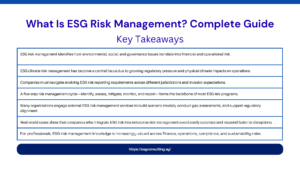
The adoption of ESG risk management has evolved from what was once a compliance-related peripheral activity to an integral part of the planning, operation and reporting of businesses. The ongoing proliferation and tightening of ESG risk reporting requirements in the global market will make companies better equipped to prevent both the interrelated nature of these risks and the resulting costly disruption and to satisfy investor demands if they view ESG risks as a part of businesses, not sustainability issues. Three takeaways for professionals considering their career in this area: first, be familiar with ESG climate risk management frameworks such as the TCFD as the most mature and well understood risk category; second, understand that ESG risk management services can provide a practical way to get experience across industries as companies build in-house capability; and third, understand that the most relevant overlap between ESG and financial decision-making is the climate risk management space. Anyone beginning to learn these skills now will be in a good position for the future when ESG risk management is mainstream across industries.