Principles for Responsible Investment (UN PRI) and Global ESG Investing
Introduction: Certified UN PRI Responsible Investment Training Program
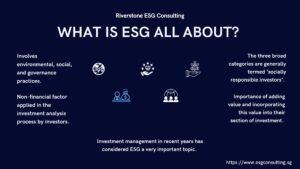
The last ten years have seen the world of global finance dramatically change where the investors have become more concerned about the sustainability and ethical approaches to conducting their business. The Principles of Responsible Investment (UN PRI), introduced by the United Nations in 2006, has already become the pillar of this change. UN PRI offers a voluntary model to implement the factors of environmental, social, and governance (ESG) to investment decision-making processes, and it is urging the investors all over the world to make sure that profitability and sustainability go hand in hand.
Since Malaysia and the greater ASEAN region are continuing to open up to global capital markets, asset managers and institutional investors are noting that ESG integration is not just optional anymore; it is mandatory. The transparency and accountability, as well as participation in the UN PRI initiative, do not only help investors to seize opportunities in the fast-growing sustainable finance ecosystem.
Knowing the UN PRI Framework.
The UN PRI framework is anchored around six principles that invite investors to make ESG considerations in the analysis of investments, investment ownership and policy participation. These are the principles of:
- Include ESG variables in the investment choices.
- Get actively involved in investee companies on matters of performance of ESG.
- Request relevant ESG disclosure by entities where they hold investments.
- Encourage adoption and usage of the Principles throughout the investment sector.
- Co-operate with other investors to enhance the effectiveness of ESG.
- Communication on the efforts made towards adopting the Principles.
A combination of these principles will result in an effective roadmap of responsible investment. Investors that embrace the UN PRI framework will have a long-term perspective of value creation, which will be based on financial performance and positive social and environmental impact.
Programs such as un pri and responsible investment strategy training for asset managers help financial professionals understand how to operationalize these principles in real-world portfolio management. Participants are equipped in case studies, interactive sessions and with scenario based learning to know the skills to find ESG risks and opportunities in their investment strategies.
The Rising Significance in ESG Integration in Global Investment.
The integration of ESG is transforming the mode of operation of the global capital markets. Sovereign wealth funds, institutional investors and private equity firms are progressively integrating ESG measures in their investment appraisal procedures. This change can be motivated by the increased evidence that companies that perform highly in ESG are more likely to provide better risk-adjusted returns and are more resilient to economic recessions.
Further, regulatory bodies and stock markets around the globe such as Singapore, Malaysia, and the European Union are placing newer more demanding sustainability disclosure regulations. These trends highlight the value of ESG integration as an investment competency.
By attending a sustainable investing and esg integration workshop based on un pri principles, asset managers and analysts can deepen their understanding of how to align portfolios with responsible investment frameworks. The workshop usually includes the information related to the ESG data evaluation, stewardship practices, the measurement of impacts and engagement strategies that will facilitate the creation of long-term values.
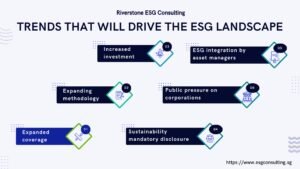
Six Major Trends that define Responsible Investment.
The responsible investment environment is constantly changing, and the following main trends are developing:
- Increased Regulatory Pressure: Governments and financial regulators are requiring more of sustainability performance forcing investors to reveal the effect that ESG factors have in their decision making.
- Data-Driven Investing: More investors are making more evidence-based decisions based on sustainability risks and opportunities, which are made possible by data-driven decision-making and advanced analytics and ESG data platforms.
- Thematic Investing: ESG investing is no longer exclusion based but is being developed in thematic funds, such as renewable energy, gender equality, biodiversity and social inclusion.
- Active Ownership: Shareholders are applying shareholder engagement and proxy voting to impact ESG practices at companies, which governance and sustainable long-term growth.
These trends show that ESG integration is increasingly emerging as a component of financial strategy, and no longer a niche issue.
Application of UN PRI Principles in Portfolio Management.
The UN PRI principles should not be adopted by means of signing the pledge only, but the systematic approach to an investment decision-making. These principles can be effectively combined by asset managers taking into account several steps:
- Create ESG Governance: Develop special ESG teams or committees which would monitor responsible investment policies.
- Create ESG Policy: The way ESG considerations are integrated into investment analysis, ownership and engagement activities should be documented.
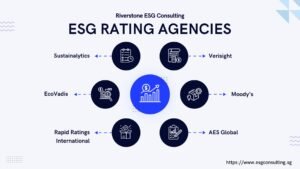
- Use ESG Data and Ratings: Integrate third-party ESG scores and analytics into financial models in order to evaluate performance of companies.
- Interact with Companies: Hold an active engagement with portfolio companies in order to promote improved ESG disclosure and performance of the company.
Measure and Report Impact: Report the financial and non-financial results of ESG integration regularly and report on the progress to the stakeholders. Through un pri and responsible investment strategy training for asset managers, investment professionals can learn how to implement these steps effectively, ensuring that their portfolios meet both fiduciary and ethical responsibilities.
The Advantages of going UN PRI.
There are some direct advantages that accompany the organizations that are in agreement with the UN PRI framework:
- Improved Risk Management: A combination of ESG factors will aid in the identification of risks associated with climate changes, governance failure, and a social disturbance on a long-term basis.
- Investor Confidence: To responsible investors, ESG performance transparency is a way of appreciating ethical business practices.
- Reputation and Brand Value: International compliance increases the credibility of the institution in the world financial markets.
- Access to Sustainable Investment Opportunity: Signatories of UN PRI usually get a network, tools and research which enhance the process of investment decision-making and innovation.
With investors and regulators currently requiring increased accountability, the UN PRI is a standard of responsible financial leadership.
Issues of how to implement Responsible Investment.
ESG integration is not without challenges even though the practice is increasingly gaining acceptance. Most asset managers are faced with uneven ESG data, inadequacy of standard methods and expectations of different investor. Moreover, smaller companies can also have resource limitations that restrict their capacity to form special ESG units and use sophisticated analytical instruments.
Nevertheless, these gaps can be corrected through continuous learning and teamwork. Participating in a sustainable investing and esg integration workshop based on un pri principles enables professionals to share best practices, understand emerging standards, and stay ahead of evolving investor expectations.
The Future of Responsible Investment in the World.
With the shift of the world economy to the sustainability models, responsible investing is bound to become increasingly popular. The present impact of the UN PRI is reached to more than 5,000 signatories with a treasure trove of USD 120 trillion assets under management, which speaks volumes of the upsurge in the need to access ethical and sustainable finance.
The ESG investment ecosystem will continue to gain strength due to technological changes and increasing activism by investors and alignment of international policy. To the asset managers in Asia, being a proponent of UN PRI does not just mean conforming to the global standards but also making the region shift towards more sustainable financial future.
Conclusion
UN PRI Principles have emerged as the new reference point in sustainable investing and the instability of asset management globally, enabling asset managers to be more responsible and transparent and impactful in the domain of finance. Through the un pri and responsible investment strategy training of asset managers and sustainable investing and esg integration workshop on un pri principles, investment market professionals will gain the skills required to incorporate ESG issues in all asset management phases. Adopting the UN PRI framework will enable the investors to be change agents and make their portfolios resilient and assist in making the world a better and fairer place.