The IFRS Sustainability Disclosure Standards (IFRS S1 and S2) Explained
Introduction to Certified IFRS Sustainability Disclosure Training Course
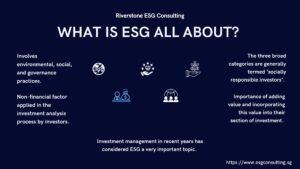
With the recent involvement of sustainability and climate related transparency taking centre stage in global finance, the IFRS Foundation has proposed a single disclosure system that aims at harmonising sustainability reporting in the global financial arena. The IFRS Sustainability Disclosure Standards – IFRS S1 and IFRS S2 – are one of the most significant steps towards including environmental, social and governance (ESG) disclosure information in the mainstream financial reporting.
These norms are designed to present investors and other stakeholders with similar, consistent, and decision-useful information concerning the sustainability of a business and its risks with the climate. To corporate leaders and finance professionals, these standards have become vital to comprehend and apply them to keep the expectations of regulators and investor confidence intact.
The Genesis of IFRS S1 and S2
The two sustainability standards under the IFRS Foundation were introduced in 2023 by the International Sustainability Standards Board (ISSB), which consolidated years of work on developing and coordinating various frameworks on sustainability reporting, including the TCFD (Task Force on Climate-related Financial Disclosures), SASB (Sustainability Accounting Standards Board), and CDSB (Climate Disclosure Standards Board).
IFRS S1 deals with the general sustainability-related disclosures and establishes requirements about the companies that disclose information on all sustainability risks and opportunities that can reasonably have an impact on enterprise value.
The specific disclosure related to climate in IFRS S2 is the reporting of climate-related risks, opportunities, and strategies which are in line with the TCFD framework.
All these standards are meant to establish one international standard of sustainability reporting – enhancing more consistency between industries and jurisdictions.
The IFRS Sustainability Standards objectives.
The major aim of IFRS S1 and S2 is to improve transparency and reliability of sustainability information to capital markets. Shareholders are becoming more interested in knowing the specifics of why environmental and social matters are important to the financial performance of a company in the long term. These standards assist in sealing that information gap with clear, structured and verifiable disclosures being required.
Some of their fundamental goals are:
- Making financial reporting sustainable: Linking ESG data with financial performance indicators.
- Enhancing uniformity in international markets: Developing a global structure that minimizes redundancy and misunderstanding of diverse reporting systems.
- Facilitating investor confidence: To supply information that sustainability risk has been identified, managed and disclosed in a responsible manner.
Knowledge of the IFRS S1 – General Requirements.
The IFRS S1 defines the general framework of the disclosures that are related to sustainability in all industries. It asks companies to make disclosures regarding their governance, strategy, risk management, and sustainability risks and opportunities metrics.
The standard focuses on disclosures which should be:
- To enterprise value, i.e. they can affect the decision of the investor.
- Uniform and similar, so that there is the ability to compare reports over time and industry.
- Related to financial statements, the incorporation of sustainability effects into the general analysis of financial performance.
This integration brings sustainability reporting to the same rigor and reliability that is expected in traditional financial reporting.
Knowledge IFRS S2 – Climate-related Disclosures.
IFRS S2 is an extension of the TCFD recommendations, with additional and more standardised requirements on climate-related data. Companies should reveal information regarding:
- Governance: The control of climate risks and opportunities by the board.
- Strategy: The impact of climate-related issues on business models, business operations, and financial planning.
- Risk Management: The procedures applied in identifying, measuring and control of climate-related risks.
- Measures and Goals: The quantitative data that will be used will include the greenhouse gas (GHG) emissions and the transition plans to the net zero.
This is aimed at providing transparency on how climate problems can impact its cash flows, financial position, or access to capital of an organization.
The value of Training and Professional Development.
Implementation of these standards demands professionals in various fields in finance, accounting and sustainability functions to establish specialized expertise. Programs such as ifrs s1 and s2 sustainability disclosure standards training for finance professionals help bridge this skills gap by translating complex regulatory language into actionable business practices.
Participants learn how to:
- Carry out interpretation of IFRS disclosure requirements as a part of financial reporting.
- Sustainability Flexible design governance frameworks.
- Establish internal mechanisms of data collection, validation and reporting of ESG data.
- Engage effectively with investors and regulators in communicating the sustainability information.
This kind of training will be critical in ensuring that the teams dealing with finance will be prepared to make the right and transparent disclosures that are in line with the IFRS expectations.
Implementing the adoption of the IFRS S1 and S2 in Corporate Reporting.
The changes to the new system of financial reporting on sustainability disclosure entail both operational and strategic changes. The way of doing this is to first evaluate the current ESG reporting procedures of the organization and determine the gaps against the requirements of the IFRS.
Key steps include:
Governance Alignment: This is to ensure that board and management structures are in place to monitor sustainability and climate concerns.
- Materiality Assessment: The determination of actions by the ESG that have a greater impact on enterprise value.
- Data Integration: It is the connection of sustainability data systems with financial reporting systems.
- Internal Controls: Implementing audit prepared documents and validation systems.
- Stakeholder Communication: Improving the transparency and comparability of the sustainability disclosures.
With such entrenchment, firms are able to establish cohesive reporting that encompasses both financial and non- financial drivers of performance.
Workshop-Based Learning for Implementation
In addition to training programs, organizations benefit from sustainability reporting and climate-related disclosure workshop under ifrs standards that focus on real-world case studies and scenario-based learning. These seminars allow the teams to use the IFRS S1 and S2 requirements to their business environments.
Typical modules cover:
- Mapping and structuring disclosure.
- Information control and e-reporting.
- Climate risk evaluation scenario analysis.
This is preparation of sustainability reports and assurance and audit.
Through practical study, the participants will have the self-confidence to read and apply IFRS standards effectively in various departments.
International Consequences and Shareholder Definitions.
Having introduced IFRS S1 and S2 is redefining the way companies report on their sustainability performance worldwide. Already this is being pursued by regulators in markets like the UK, Singapore and Australia, in effect making ISSB-aligned disclosures compulsory. Companies that are early adopters of these standards are becoming more popular with investors because they show responsibility and an early proactive response to risks associated with climate change.
The use of IFRS-equivalent reporting also promotes comparability, attracts foreign capital and renders companies to be in the leadership of sustainable nature.
Challenges in Adoption
Although the advantages are obvious, IFRS S1 and S2 may not be easy to implement. Some challenges encountered by companies include the quality of data, resource limitations and inter-jurisdictional standardization. The cross-functional cooperation of sustainability, finance, and risk departments is necessary to integrate climate metrics into the regular financial systems as well.
To address the mentioned barriers, the organizations need to focus on a staged implementation, invest in ESG data technologies, and external advisors to ensure capacity building and verification assistance.
Conclusion
The IFRS Sustainability Disclosure Standards are a landmark in corporate reporting in the world. IFRS S1 and S2 fill the gap between sustainability and financial information thereby giving investors a common, credible and comparable basis of making decisions.
Organizations can prepare the skills and be able to implement these frameworks successfully through ifrs s1 and s2 sustainability disclosure standards training of finance professionals and sustainability reporting and climate-related disclosure workshop under ifrs standards, so that they can be transparent, resilient and relevant to the changing global sustainability environment.