ESG Strategy for Logistics & Supply Chain
Introduction to Certified ESG Logistics Strategy Training
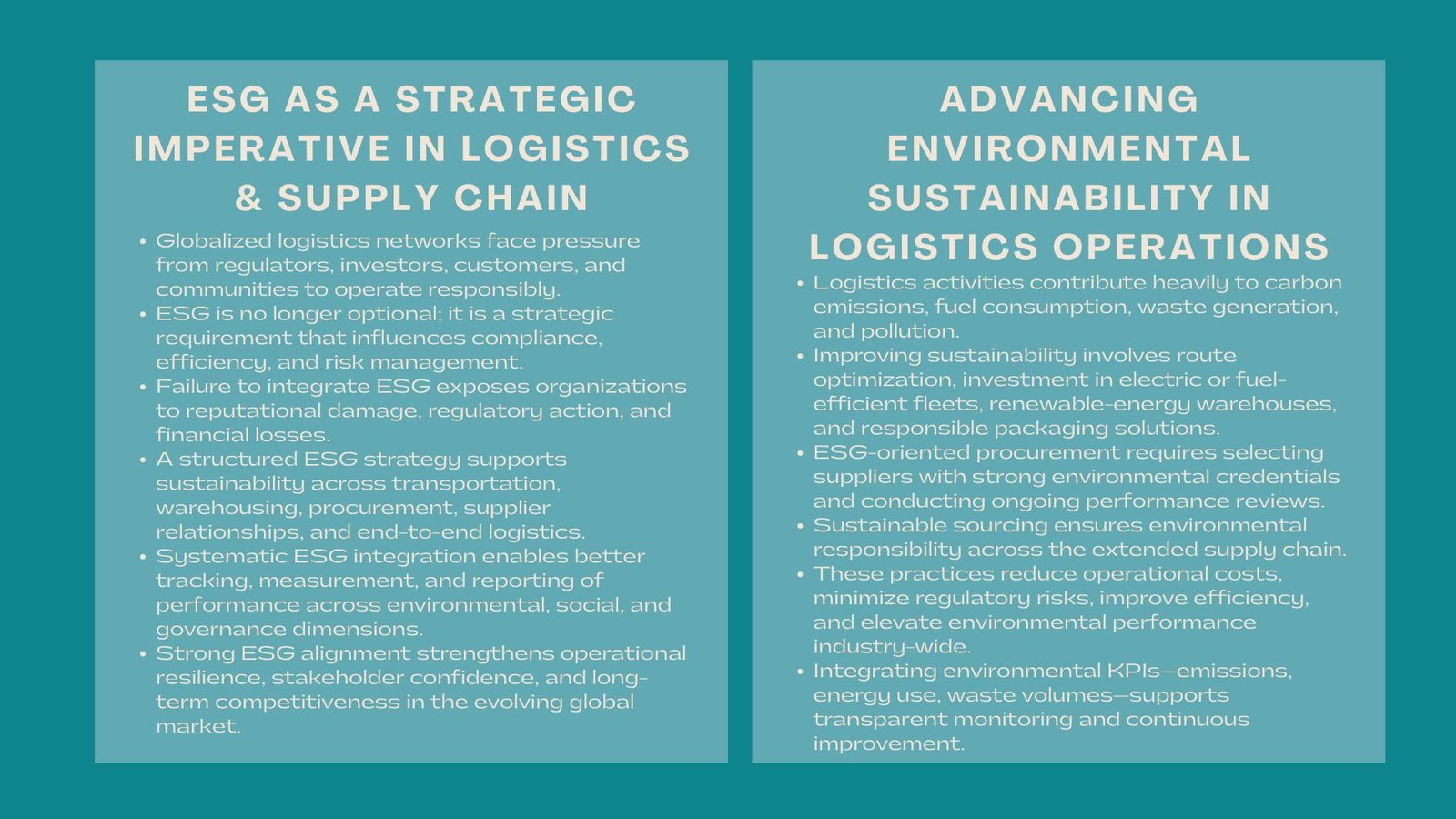
With the world experiencing a highly interconnected and globalized form of the economy in today, the logistics and supply chain organizations are under the pressure of regulators, investors, customers, and other stakeholders to act responsibly and sustainably. The said pressures are no longer a consideration option, rather, they have become critical strategic requirements that can directly affect operational effectiveness, compliance with regulations, risk reduction efforts, trustworthiness and credibility to the stakeholders and the long term competitive business survival. Any organizations failing to consider environmental, social, and governance (ESG) as central aspects of their work are under threat of being reputedly cut and a subject of intense regulation and even financial losses.
Implementing a structured supply chain ESG strategy facilitates organizations to encompass sustainability and compliance throughout all their operations including transportation systems and warehouse operations as well as procurement practices, supplier relationships and the whole logistics processes. Systematic integration of ESG compliance would enable the companies to track and quantify the performance in various dimensions, maintain compliance with the changing local, regional, and global regulatory mandates and actively deal with environmental, social, and governance risks before they turn into operational or reputational challenges.
The powerful approach to ESG is not about compliance only; it can be seen as proactive in terms of organizational resilience, operational efficiency, and the establishment of entrepreneurial responsibility and transparency culture. By incorporating ESG within the operations of the supply chains, companies are in a better position to minimize environmental effects including carbon emissions, energy use, and waste disposal as well as to advance just labor reviews, suppliers moral conduct and social duty programs.
This is because the holistic approach does not only reduce the risk, but also enhances overall operational performance, assures-stakeholders of sustainability, as well as, creating sustainable values to investors, partners, employees, customers, and the communities on which the organizations operate.
Furthermore, with the increasing demand of sustainability in the world, the organization that has a robust and well-established ESG structure has a competitive edge. They are also placed to not only comply with the regulatory requirements but to also help draw responsible investment, reputation of the brand and the industry of logistics and supply in more responsible and future-oriented directions. The logistics organizations are able to create a robust and sustainable supply chain by applying the systematic implementation of ESG issues into strategic planning, operations decision making, and reporting functions and achieve long-term success in the fast changing global marketplace.
Elevating ESG Integration Across Supply Chain Operations
Developing Environmental Sustainability Practices in Logistics
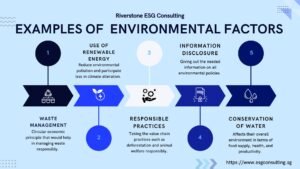
The ESG compliance logistics sector organizations have a significant aspect of environmental sustainability. The business activities of the supply chain not only add to carbon emission, power consumption, and waste but also constitute a significant portion of the environmental pollution. It is necessary to introduce initiatives that help lessen the pollution level. Some of the strategies that companies can embrace include optimising transportation routes, investment of fuel-efficient or electric fleets, exploiting the use of renewable energy in warehouses and the adoption of sustainable packaging methods.
It is also important to incorporate ESG considerations in the procurement decision. Choosing their suppliers and partners who have good environmental credentials, good green sourcing policies as well as checking up on their suppliers performance is a surety that sustainability is ensured at the supply chain level. Those companies that actively embrace the practices will be able to save money, improve their efficiency, and minimise regulatory risks and improve their environmental status within the industry.
Strengthening Social Responsibility Across the Supply Chain
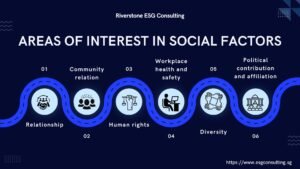
The scope of social responsibility in the logistics sector goes further than just the activities carried on by the organization, to specifically suppliers, the welfare of the employees, and interactive activities with the community. The provision of the safety of the workforce, decent labor, and appropriate employment terms and conditions is a core element in ESG compliance. Ethical practices are strengthened in the supply chain through training programs, health and safety programs, and fair labor audit programs in the plant of the suppliers.
Social responsibility can also be incorporated by the organizations in suppliers management on the form of codes of conduct, supplier evaluations and cooperative betterment initiatives. Through their social sustainability, the logistics and supply chain organizations also sustain good associations with their employees, partners and local communities and strengthen their operational reliability and resilience.
Implementing Strong Governance Structures for Compliance and Accountability
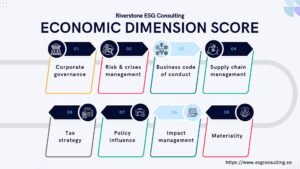
The implementation of ESG strategy in the logistics and supply chain management is based on governance practices. Good governance provides accountability, transparency, and compliance to the law and set regulations. Companies have to come up with well defined policies, reporting, risk management rules, and monitoring of compliance mechanisms.
The application of ESG governance to the organization is associated with creating performance dashboards, tracking the KPIs, performing an audit regularly, and providing a report on the ESG performance to both the internal management and external stakeholders. Effective governance enables organizations to mitigate any prospective risks to the ESG, take preemptive action to avoid them and also show goodwill to their regulators, investors and partners.
Core Components of a Supply Chain ESG Strategy
Leveraging Data and Analytics for ESG Decision-Making
To manage logistics ESG, the key information that must be codified is data-driven decision-making. The organizations may deploy monitoring tools and analytics systems that could be used to review carbon emissions, energy usage, waste production, labor practices and compliance across the suppliers. Through real-time information and predictive analytics, business organisations can detect tendencies, manage performance of operations, and make rational ESG choices.
Powerful reporting services and dashboards will help the enterprise maintain a high level of transparency and accountability throughout the organization by providing a uniform way of reporting ESG performance to investors, regulators, and customers. The use of ESG metrics as part of the key performance indicators determines the correspondence of the sustainability goals and the business performance.
Enhancing Supplier Engagement and ESG Collaboration
At Volkswagen, the success of the logistics ESG strategy is based on the cooperation with suppliers, partners and other stakeholders. Quality engagement of suppliers will be carried out by training, conducting compliance audits and collaborating on improvement initiatives hence enforcing uniformity in the attainment of ESG standards in the supply chain.
Collaborative strategies like supplier score cards, supplier sustainability workshops and incentive systems facilitate and promote responsible behavior, develop the supplier relations, and enhance the capacity of the whole supply chain. In such companies, an active management of ESG performance in the grid of the company gives a competitive edge, and minimizes the risks of operations, along with an improvement of the reputation.
Integrating ESG into Risk Management and Strategic Planning
Environmental risk, labor risk, non-compliance with the laws and reputational risk are some of the examples of ESG risks of the logistics and the supply chain operations. When the ESG policy is developed in an all-inclusive way, risk identification, mitigation measures, and constant monitoring are incorporated in operational planning.
Strategic alignment, in turn, makes sure that ESG principles are represented in the procurement, transportation, inventory and warehouse practice. Incorporating ESG into the logistics operations can help the organization foresee the challenges, manage changes in regulation and ensure sustainable operations.
Advanced Practices and Emerging Trends in Supply Chain ESG
Adapting to Green and Digital Transformation
There is a massive transition by the logistics industry towards green technologies and digitalization. The most important measures of contemporary ESG compliance are the use of electric or hybrid vehicle fleets and the adoption of energy-saving warehouse solutions, the use of digital platforms to optimize routes and make demand forecasts and monitor emissions.
An IT-based tool like blockchain, IoT or cloud system allows transparent tracking of the ESG performance at both suppliers and operational units and improves accountability and sustainability. Logistics organizations that adopt digital transformation are able to become efficient and increase the credibility of their ESG.
Preparing for Regulatory Evolution and Stakeholder Expectations
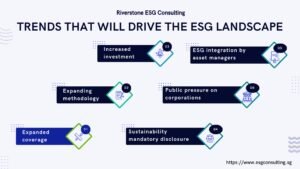
The regulatory environment and the expectations of investors on the compliance of ESG in logistics are changing at a high rate. The firms need to keep pace with variations in emissions regulations, reporting requirements, labor regulation, and sustainability disclosure regulation.
Logistics organizations can initiate the response to the regulatory changes and prove the role of responsible operational activities by creating versatile ESG programs and revising the compliance practices on a regular basis. Individual engagement of stakeholders with the help of extensive reporting and active communication will contribute to trust, reputational risks, and make companies leaders in sustainable logistics.
Conclusion
The formulation of an inclusive supply chain ESG strategy has grown to be a crucial requirement of logistics organizations that have the objective of not simply attaining operational effectiveness and regulatory standards but long-term sustainability and toughness in a globally fast-evolving economy. In the present business world, companies are under increasing scrutiny by regulators, investors, clients, and other stakeholders who have put pressure on logistics companies to be responsible, ethical, and sustainable, in their whole supply chain practice. Through well-organized ESG programs, advanced analytics, and the integration of ESG principles in the daily operations, procurement, transportation systems, warehouse facilities, and reporting, corporations are able to promptly and clearly monitor, quantify and report its ESG performance.
An effective ESG strategy offers logistics entities the guideline through which they can actively work on managing risks posed along environmental, social as well as governance lines besides creating quantifiable business worth. Conducting staff training on environmental stewardship, companies may manage carbon emission efforts, maximize the use of fuel, minimize production of wastes, and adopt energy-saving practices in the transportation and warehousing logistics.
Encouraging social responsibility would guarantee equitable work practice, employee safety, cultural and variety, and responsible supplier connections. Enhancing the governance frameworks can help organisations maintain compliance with the domestic and global regulations, enhance transparency as well as develop the mechanisms of accountability, which strengthen the trust in stakeholders. With these measures, the performance will be efficient in operation, risk reduction, and overall performance.
The advantages of integrating the ESG principles in the logistic operations are compound. Businesses have less regulatory and reputational risks, operational efficiency, enhance workforce engagement and retention, and partnerships, client, and investor relations. Moreover, an ESG-oriented supply chain promotes the strength of the resilience in the long run as it equips organizations to manage all impacts of climate-induced disruptions, transformed societal requirements, and the shifting regulatory environment efficiently. Through embedding ESG in the strategic planning process, operational decisions, and reporting systems, the logistics and supply chains establish themselves to foresee the challenges, explore the opportunities and stay at the top of the fray in an ever more sustainability-focused market.
Programmed ESG initiatives also form an important driver of innovation and continuous improvement throughout the logistic industry. Using data analytics, real-time tracking tools, and predictive modeling, organizations can monitor key performance indicators, by determining which areas can be optimized and employ evidence-based approaches that will increase environmental and social results. Clear reporting on the ESG gains trust among the stakeholders, it is an effective way of showing improvements and firms can also compare their performance with the industry best practices. In the long-term, this develops an ethic of responsibility and lifelong learning that facilitates operational excellence and sustainable development.
In addition, inclusion of ESG in the main supply chain operations will give organizations the opportunity to stand out in a competitive market. Sustainable companies draw responsible investors, enhance customer loyalty, and boost the morale of the employees.
They also impact positively on the communities where they are operating by aiding them in the development of their areas, social programs as well as environmental conservation programs. Incorporating ESG into the procurement process, the companies can make sure that the suppliers can implement the responsible business practices and the positive impact of the ESG strategy is even more evident throughout the supply chain ecosystem.
Finally, an effective supply chain ESG strategy for sustainable logistics and supply chain operations can also drive the change of logistics organizations, which are operationally oriented businesses, into the sphere of sustainable practices leaders. Focusing on alignment of the strategic goals with the principles of ESG, companies will be able to realize positive results, which are measurable, in the spheres of the environment, society and governance, ensure the adherence to the new global standards, and show a strong risk management in the framework of a fast changing market.
With the increasing global demands towards sustainability, the organizations that adopt significant logistics and supply chain management ESG programs are enjoying a rare opportunity to innovate, develop sustainable value, increase the trust of the stakeholders, and hopefully maintain a sustainable competitive advantage even in the long-term.