ESG Accounting in Transportation and Logistics
Introduction: Professional ESG Accounting Logistics Training
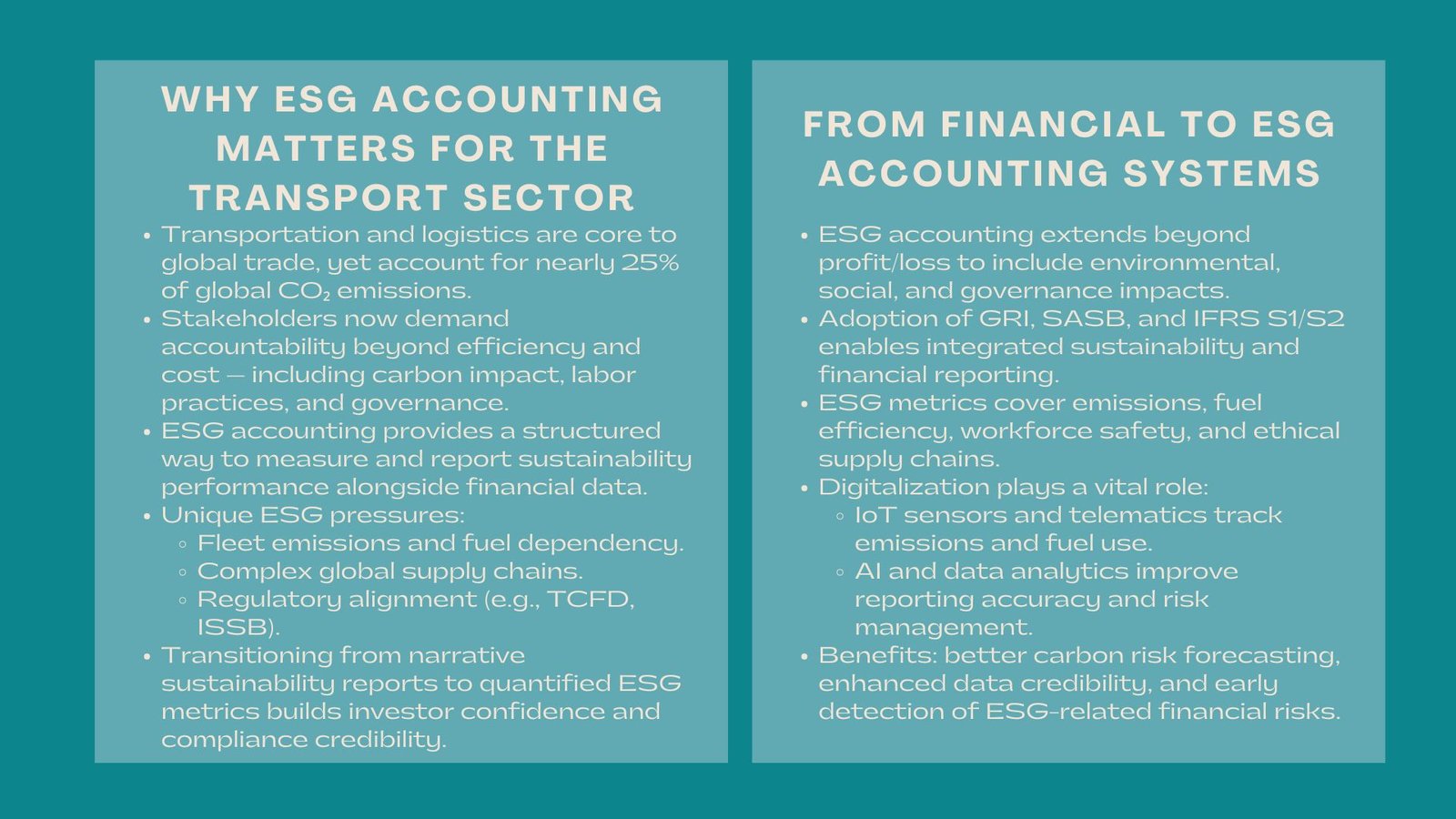
Transportation and logistics sector is the pillar of the world economy, as it is the transport of goods, people, and resources across the borders. However, it is also a major source of greenhouse gas emissions in the world, with its contribution of CO2 associated with energy almost a quarter of the total worldwide. With sustainability taking major focus in corporate governance and as expected by investors, the industry is experiencing pressure to incorporate Environmental, Social, and Governance (ESG) criteria in both financial and operational reporting.
ESG accounting offers an organized approach in order to measure, manage and report sustainability performance in a manner that complies with the regulatory environment and the trust of investors. To logistics and transport operators, cost and efficiency tracking is no longer sufficient, but now the companies should measure the environmental footprint, labor practices, and governance structure as closely as they would measure the traditional financial reporting.
1. The Increasing the Significance of ESG Accounting.
1.1 ESG Unique Pressures in Transportation and Logistics.
The transportation industry is one of the few industries that have such a complicated ESG challenge. Businesses run huge fleets, are heavily relying on fossil fuels and have lengthy supply chains with contractors, warehouses and global distribution centres. The given features render ESG accounting not only desirable but also necessary to comprehend long-term risks and opportunities.
Whereas such businesses as finance or technology can work on the sphere of governance or data protection, logistics enterprises have to measure the amount of emissions of cars, ships, or aircrafts, analyze the sustainability of their partners, and guarantee the adherence to the changing policies regarding the carbon. Investors and regulators now demand complete disclosure on these aspects, particularly where those that are used internationally like the Task Force on Climate-related Financial Disclosures (TCFD) and the International Sustainability Standards Board (ISSB) facilitate harmonisation.
1.2 The Changes in the Direction of Measurable ESG Indicators.
ESG accounting helps companies to shift towards the qualitative sustainability commitments to the quantitative data. Monitoring the indicators of fuel efficiency, route optimization, energy consumption, waste elimination, and labor state will enable the companies to report on actual progress and assess the aspects requiring enhancement.
By systematically organizing data and presenting disclosures in a standard way, the firms will be able to provide credible information about their performance to the regulators, shareholders, and clients. This transition towards evidence-based accounting as opposed to a narrative reporting is the basis of value creation in the long term within the logistics industry.
2. Incorporating ESG into the Corporate Accounting Systems.
2.1 Financial Accounting to ESG Accounting.
Conventional accounting systems are concerned with profits, expenditures, and debts. ESG accounting however, takes this further to cover the externalities, which are environmental effects, social consequences and governance risks. An example is the expense of waste disposal or carbon emission which might not be directly reflected in the financial statements but has a huge impact on the valuation of a company, brand image and regulatory risks.
In order to cope with these complexities, most companies have started adopting global standards of reporting like those of Global Reporting Initiative (GRI), SASB (Sustainability Accounting Standards Board), and IFRS S1/S2 to report on the same. These structures assist in the quantification and disclosure of non-financial data in addition to the financial statements so that integrated sustainability reporting can be carried out and the investors can have confidence in it.
This approach is particularly relevant when implementing transportation ESG accounting practices, which help quantify emissions from logistics operations, maintenance activities, and supply chains while linking these metrics to financial performance indicators.
2.2 ESG Data Collection and Verification Challenges
Correct accounting of the ESG is based on thorough data gathering of numerous departments and operational units. The distributed networks of logistics firms present specific problems with the process of consolidating data of transportation fleets, third-party carriers, and warehouse operations.
In this regard, digitalization is an important factor. Today, telematics systems, IoT enabled sensors, and AI-driven analytics assist companies to monitor fuel consumption, plan the optimal routes and monitor emissions in real-time. However, the issue is not only technological because businesses should guarantee the integrity of data, reconcile measurement practices and pursue third-party verification to address the credibility of ESG disclosures.
3. ESG Accounting and Risk Management.
3.1 Regulatory and Financial Risks.
The world is tightening its regulations in regard to sustainability reporting and emissions reduction. The policies of carbon taxes and the obligatory disclosure of the ESG policy are changing the way transportation and logistics companies in Singapore and other key markets are conducted. Failure to comply also poses as a threat to both financial fines and access to sustainable funding and venture capital.
With ESG accounting frameworks, businesses can detect, evaluate and preclude such risks at an early stage. The ability to provide sustainability information in financial systems will allow companies to anticipate the future cost of carbon taxation, future fuel price fluctuations, and the financial effect of regulatory changes.
3.2 Social and Governance Below.
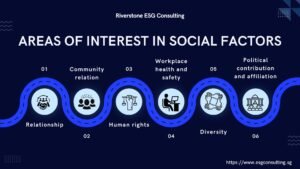
In addition to environmental concerns, ESG accounting also focuses on social and governance concerns, including workforce safety and labor conditions, diversity, and supply chain ethics. The transportation firms which are operating at the international level usually employ thousands of workers with different labor laws. To guarantee that stakeholders have faith in the organization, it is important that good governance and social responsibility is promoted.
Having systematically incorporated these non-financial indicators in the risk measures, firms become more resilient in general and increase the trust of long-term investors.
4. ESG Accounting Strategic Benefits.
4.1. Building Investor and Customer Confidence.
ESG data are becoming a popular method that investors use to assess corporate resilience and sustainability. In the case of logistics firms, evidence of effective ESG accounting practice indicates the desire to act responsibly and sustainability of their business in the long run. This improves reputation as well as providing access to green financing, sustainability-related loans and strategic collaborations with environmentally friendly clients.
Besides, the customers are also increasingly choosy when it comes to selecting supply chain partners. Companies that adhere to ESG compliance logistics sector standards gain a competitive edge by offering transparent reporting and sustainable operations that align with clients’ ESG commitments.
4.2 Driving Operational Efficiency and Innovation
ESG accounting promotes operational efficiency by uncovering inefficiency in energy consumption, fuel consumption and distribution of resources. Through the measurement of these aspects, logistics companies are able to recognize cost-cutting opportunities, which are in line with green objectives.
As an example, business organizations can implement technologies of route optimization or go green with electric vehicles, in case they monitor fleet fuel efficiency and emissions intensity. On the same note, the warehousing operations can invest in renewable energy generation and energy-efficient systems to minimize the costs and emission.
This two-fold approach to financial and environmental reporting makes ESG accounting more of a strategy rather than a compliance activity.
5. The New Future of ESG Accounting in Transportation.
5.1 Moving toward Integrated Sustainability Reporting.
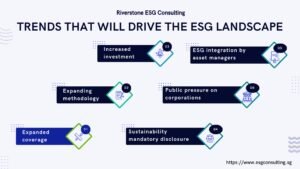
The following stage in the process of ESG accounting will be the idea of integration- the direct inclusion of sustainability indicators in the standard financial statements. As the IFRS Foundation gains momentum in their sustainability standards, it will not only be in the near future that companies will be required to report ESG data in a way that is similar to the financial disclosure practices.
This kind of integration guarantees that business strategy, capital allocation and risk management would not be independent of ESG performance. In the case of transportation and logistics companies, it does not only imply the measurement of the emissions but also the quantification of the contribution to the profitability and shareholder value of the sustainability efforts.
5.2 The Impact of Collaboration and Technology.
With the development of ESG reporting, the future of transportation sustainability will be defined by the industry collaboration and digital innovation. Traceability using blockchain, common data platforms, and analytics utilizing AI will enable firms to improve supply chain transparency. Work with regulators and investors will also play an important role in establishing clear, consistent accounting methodologies that will lead to global comparability.
Conclusion
The transportation and logistics industry has been keen on using ESG accounting as an important instrument to gauge the sustainability performance, compliance risk management, and increased stakeholder trust. The expanding expectations of transparency and accountability means that firms implementing progressive transportation ESG accounting principles and in accordance with the requirements of the logistics sector of compliance with ESG accounting standards will have a higher chance of succeeding in the long term.
The ESG accounting will not be a rather distinct reporting activity in the years to come but a way in which the transportation firms will plan, operate and expand in a low-carbon future.