ESG Compliance in Retail and Consumer Goods
Introduction: Professional ESG Retail Compliance Training
The Environmental, Social and Governance (ESG) factors have been the focal point of the operation, reporting and competition of a retail and consumer goods company. Customers, stockholders and enforcers are more than ever questioning the way that brands obtain raw materials, their waste disposal, and treatment of their employees. ESG compliance has become a business necessity instead of a voluntary activity with increasing demands on transparency and ethical operations. Those retailers, who successfully incorporate the ESG principles in their activities, do not only address the expectations of the stakeholders, but also enhance the brand loyalty, minimize regulatory risks, and open the long-term value.
1. Knowledge of ESG Compliance in the Retail Industry.
1.1 The Increasing Role of ESG Regulation.
The retailers and consumer goods businesses are confronted with distinctive ESG problems as they have large-scale supply chains, significant environmental consequences, and direct interaction with consumers. The stock exchanges and governments of the region, such as Singapore Exchange (SGX) and Bursa Malaysia, now make listed companies submit elaborate sustainability disclosures. These regulations focus on climate-related risks, responsible sourcing and governance accountability- places where retail companies have been prone to questioning.
The Retail ESG compliance checklist is becoming a practical tool for ensuring adherence to evolving standards. It encompasses variety of aspects including tracking greenhouse gas emissions, auditing suppliers sustainability, diversity and inclusion, and oversight by board of directors. This checklist is used to ensure that businesses are in line with international standards such as Global Reporting Initiative (GRI), Task Force on Climate-related Financial Disclosures (TCFD) and Sustainability Accounting Standards Board (SASB).
1.2 The Change in Varying to compulsory ESG Reporting.
What was optional before has now become mandatory. Retailers in numerous markets are now required to release annual sustainability reports which measure their effect on the environment and the community. The change has generated both demand and opportunity: those companies that actively develop ESG competencies develop a competitive advantage, whereas laggards face the risk of reputational and financial losses. The transparency of ESG data has become one of the symbols of reliability, especially among consumers of millennial and Gen Z generations who think ethically.
2. Social Responsibility and Supply Chain Disclosure.
2.1 Reducing Carbon Footprints
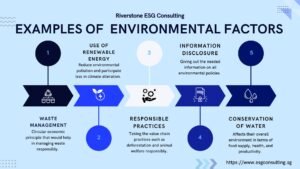
The environmental pillar of ESG is aimed at minimizing wastes, energy consumption and carbon emissions. In the case of retail and consumer goods companies, it may primarily require a shift to renewable energy, more sustainable packaging and circular economy processes. Unilever and IKEA are global brands that have led through their dedication to net-zero and the redesign of products that can be recycled or re-used.
The local retailers in Singapore have not been left behind, as they have established carbon-reduction targets in line with the Green Plan 2030 of the country. Carbon tracking systems can be used by the retailers to track emission of manufacturing up to delivery. In addition to compliance, it assists companies to predict future carbon taxes and match the investor expectations of low-carbon business operations.
2.2 Ethical Sourcing and Supply Chain Due Diligence.
One of the greatest ESG risks to the retail industry is the supply chains. Ethical sourcing is no longer a negotiable issue starting with palm oil and cotton, to packaging materials. The retailers are required to make sure that their suppliers adhere to the anti-corruption, labor, and environmental standards. Other technologies, like blockchain, are utilized to make supply chains more transparent and are now offering traceable information on sourcing raw materials to delivery of the products.
Any company that overlooks misconduct of suppliers suffers dire reputation. A number of international clothing and food companies have faced consumer pressure due to unfavorable practices in their subcontractors. Retailers will be able to establish credibility and reduce the risk of ESG-linked scandals by implementing supplier sustainability scorecards and employing third-party audits.
3. The Social Aspect: Employees, Multiplicity, and Customer Confidence.
The company values employee welfare and inclusion by providing training, coaching, and motivating them to engage in their development.
3.1 Employee Welfare and Inclusion
The company will appreciate the welfare and inclusion of employees through training, coaching, and encouraging employees to take part in their development.
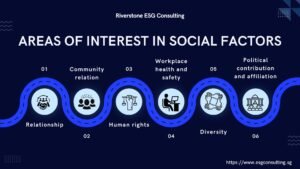
Retail industry is one of the largest employers in the world, and the well-being of the labor force is a significant part of the ESG compliance. Safe working conditions, equality in the gender aspect, and fair wages are now the norms. Inclusive hiring process and employee development initiatives have proven to be effective in enhancing retention as well as innovation by companies such as L’Oreal and Walmart.
Diversity and inclusion do not only limit to internal practices, retailers are also supposed to apply equality in their supplier network. By giving women-owned and minority-led suppliers more power, such as, will increase brand equity and pursue broader social sustainability objectives.
3.2 Creating Trust with consumers by responsible marketing.
Consumers no longer want quality products, but something on which they can identify with. Sustainability efforts, fair-trade sourcing, and environmental successes are aided with transparent communication that builds a level of trust in the consumers. False information, in turn, may cause the greenwashing accusation and legal threats. Brands should be able to uphold the credibility of the claims they make regarding sustainability. All the sustainability claims should be verifiable and need to be backed up by quantifiable data.
4. Governance: ESG in Corporate Strategies.
4.1 Board Oversight and Accountability.
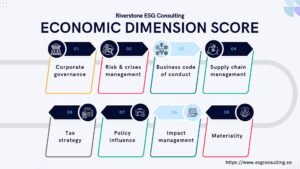
ESG compliance is heavily dependent on strong governance. Sustainability oversight needs to be incorporated in strategic decisions by boards in retail companies. This involves the establishment of ESG-related key performance indicators (KPIs), the process of risk assessment reviewing, and the adherence to international reporting standards. The use of board-level sustainability committees has become a best practice that guarantees the ongoing monitoring of the ESG performance.
It is common today that many companies base executive compensation on sustainability objectives in order to align leadership compensation with long-term value generation. This method helps to increase accountability and prove to the stakeholders that ESG principles are not just PR tools but part of corporate governance.
4.2 Makes Financial Reporting Greener.
Investors are now more and more requiring standardized ESG measurements together with financial performance. The integration of ESG accounting for retail industry reporting ensures that sustainability data is measured, verified, and presented consistently. This allows cross-correlations to be made between businesses and industries. Retailers are implementing financial reporting systems that recognize expenditures and outcomes that are ESG related, like the cost of carbon offsets, renewable energy projects or community development projects.
Moreover third-party assurance is increasingly becoming commonplace, and this increases reliability of sustainability disclosure. The certified ESG reports do not only satisfy the requirements of the regulations but also enhance the trust of investors in the long-term viability of a company.
5. Technology and Innovation of ESG Transformation.
5.1 Data Analytics and Digital Reporting Tools.
The future of ESG compliance in retail is through the use of data to make decisions. Real time monitoring of energy consumption, minimization of waste, and performance of suppliers can now be tracked through digital platforms. Sustainability data can also be analyzed with the help of artificial intelligence (AI) to determine the risk hotspots or predict environmental effects. These innovations enable ESG reporting to be more efficient, transparent and verifiable.
Sustainable product innovation is a concept that will be established in the fifth chapter of the book.
There is also innovation in products by retailers. Sustainable design is a trend that is emerging to be used as a differentiator in competitive markets, whether it is biodegradable packaging or energy efficient logistics. Companies investing on sustainability-based innovation do not only meet the regulations but also react to the changing customer expectations of the ethical and eco-friendly products.
Conclusion
The consumer goods and retail business are on the cross road. Simply being ESG-compliant is no longer a box-ticking activity, but a strategic source of resiliency, profitability, and brand confidence. Businesses that incorporate sustainability in their business operations will be in a better position to attract investors, retain customers as well as meet the challenge of the global standards becoming tight. With the advances in technology and regulation, progressive retailers will change their reactive compliance to proactive leadership to redefine as to what sustainability truly means in the contemporary marketplace.